

Freight Market Under the Lens: Challenges, Shifts, and Strategic Solutions
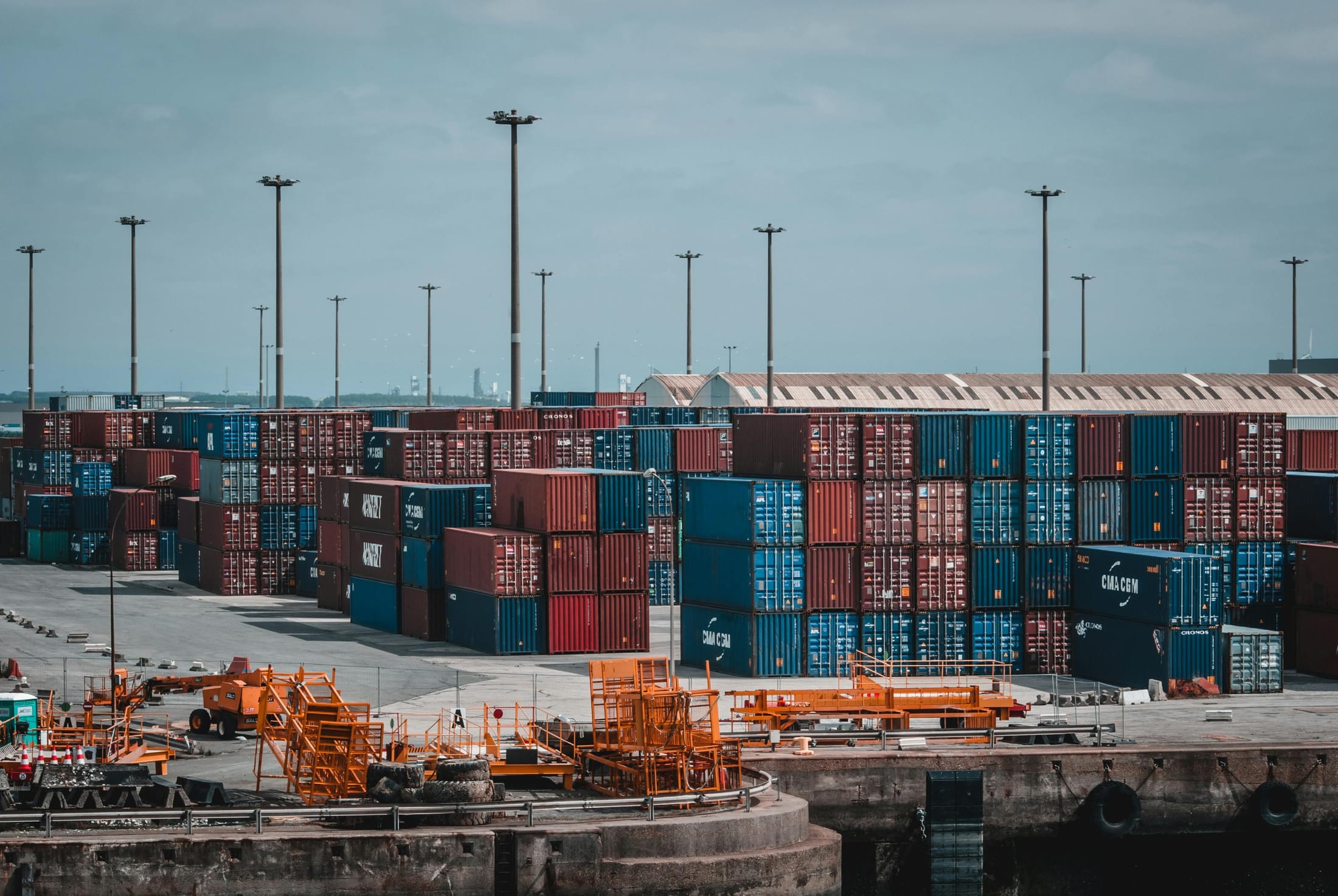
The global freight market sits at the heart of modern commerce, facilitating the movement of goods across borders, oceans, and cities on a staggering scale. In 2022, the global freight and logistics industry was valued at $9.58 trillion, and analysts project it will surge to $14.10 trillion by 2028, growing at a 6.7% CAGR as e-commerce and global trade expand.
Yet, this rapid expansion comes with a complex set of challenges that freight operators, shippers, and policymakers must navigate, ranging from infrastructure bottlenecks and labour shortages to technological adoption barriers.
Compounding these pressures, geopolitical conflicts have introduced a new era of volatility. The Russia-Ukraine War alone disrupted trade flows worth over $1 trillion annually across energy, agriculture, and raw materials, while ongoing instability in key shipping corridors has redefined global freight risk.
Core Challenges Facing the Freight Market
1. Infrastructure Strain and Congestion
A fundamental issue confronting freight networks worldwide is aging or inadequate infrastructure. Congested ports, limited rail connectivity, and underdeveloped road networks result in slow movement and increased costs.
Ports in major hubs have seen waiting times increase by up to 300% during peak periods, stretching capacity and affecting efficiency.
Rail and road congestion also contributes to increased turnaround times and operational drag.
Geopolitical disruptions have amplified these bottlenecks. During the Red Sea Crisis, vessels rerouted around the Cape of Good Hope added 10–14 days to transit times between Asia and Europe, increasing shipping costs by up to 40% on key routes. This diversion placed additional strain on alternative ports and inland transport networks already operating near capacity.
“Our networks were built for the last century’s volumes, not the volumes and speed demanded today,” says Marina Castillo, Head of Global Logistics at Meridian Freight Solutions. “Without coordinated public-private investment, bottlenecks will only get worse.”
2. Labour Shortages and Workforce Stress
Freight operations depend heavily on skilled labour, yet the industry is experiencing a labour shortage. In the U.S., for example, a shortfall of 80,000 truck drivers in 2023 compelled carriers to look for automation and training solutions.
War-related disruptions have also affected labour availability, particularly in Eastern Europe, where the Russia-Ukraine War displaced millions of workers and reduced the availability of drivers, warehouse staff, and port labor across regional freight networks.
“It’s not just about filling positions, it’s about building careers in freight where young talent sees a future,” explains Raj Patel, CEO of Global Freight Alliance.
3. Technological Adoption Barriers
While digital transformation, AI, IoT, and analytics promise massive productivity boosts, many firms struggle to implement these at scale. More than 60% of freight operators face tech-integration challenges due to resource constraints, legacy systems, or a lack of skilled personnel.
Smaller companies often struggle to justify the $200,000–$1 million upfront investment necessary for comprehensive analytics platforms.
At the same time, geopolitical instability has accelerated the urgency for digital adoption, as companies require real-time visibility to reroute shipments quickly when conflict zones or sanctions disrupt traditional trade corridors.
4. Regulatory and Compliance Complexity
Freight operates in an increasingly regulated environment, from emissions standards to customs regulations. Compliance costs are expected to rise by ~20% as more stringent environmental rules take effect, squeezing margins.
Sanctions linked to the Russia-Ukraine War have added further complexity, with over 10,000 individual trade restrictions imposed globally, forcing freight operators to continuously adapt routing, documentation, and compliance processes.
5. Market and Fuel Volatility
Unpredictable fuel prices and global trade disruptions, including geopolitical tensions and regional conflicts, continue to unsettle freight pricing structures and route planning.
Following the outbreak of the Russia-Ukraine War, global diesel prices surged by more than 60% in some regions, while marine fuel costs spiked sharply, directly increasing freight rates. Similarly, disruptions in the Red Sea have caused container freight rates on Asia–Europe routes to more than double at peak periods in 2024.
Innovative Solutions and Strategic Responses
Despite these pressures, the freight industry is evolving rapidly, leveraging technology, collaboration, and sustainability initiatives to address systemic issues.
1. Digital Transformation and Real-Time Visibility
AI-powered platforms are already reshaping freight operations.
Logistic platforms using machine learning have reduced fuel costs by up to 25% and improved on-time deliveries by 30% through predictive routing.
Real-time IoT tracking is now adopted by 65% of freight firms, improving transparency and reducing loss.
These tools have become critical in conflict scenarios, where companies must dynamically reroute shipments around blocked corridors such as the Black Sea or Red Sea, often in real time.
“Data gives us eyes where we once had blind spots; it lets freight adapt in real time,” affirms Charlotte Nguyen.
2. Multimodal and Smart Infrastructure
Freight operators are embracing a multimodal strategy — combining sea, air, rail, and road transport to maximize efficiency and resilience.
Since the Russia-Ukraine War disrupted Black Sea shipping routes, rail freight between Asia and Europe via Central Asia (the “Middle Corridor”) has grown by over 30%, reflecting a structural shift toward diversified logistics pathways.
In regions with aging infrastructure, public-private investment is beginning to unlock upgrades.
3. Sustainability and Green Fleets
Environmental pressures are encouraging a transition to electric and hybrid freight vehicles.
China’s rapid shift toward electric heavy trucks, from 9.2% to 22% of new sales in a year, signals a broader decarbonization trend.
At the same time, war-driven energy insecurity has accelerated investment in alternative fuels and energy-efficient logistics, as companies seek to reduce exposure to volatile fossil fuel markets.
4. Resilience Through Collaboration and Partnerships
Industry experts emphasize that freight resilience won’t come from technology alone — it will require collaboration among carriers, shippers, ports, and regulators.
Recent crises have demonstrated this clearly: coordinated international naval efforts in the Red Sea and joint rail initiatives across Eurasia have been essential in maintaining freight continuity under disruption.
Emergent Industry Lens: Looking Forward
The freight market in 2026 is at a pivotal moment, shaped by global trade recovery after pandemic pressures, accelerating digitization, and a new wave of customer expectations.
However, it is equally shaped by a more fragile geopolitical environment, where conflict-driven disruptions are no longer rare events but recurring features of global trade.
Emergent Industry Lens sees three core themes shaping the freight landscape:
Evolution, Not Disruption
Resilience as Competitive Advantage
Sustainability as Strategy
In a world where 11 billion tons of goods were shipped by sea in 2023 and e-commerce continues its breakneck growth, freight remains a dynamic, essential industry.
Yet, with an estimated 12% of global trade passing through high-risk maritime chokepoints affected by conflict, the ability to anticipate and respond to disruption will define industry leaders in the decade ahead.
Its challenges are real, but so are the solutions, and with strategic vision, the future of freight promises to be both resilient and innovative.
Reactions